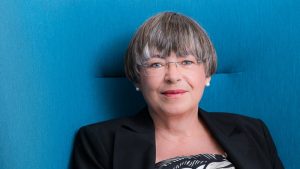
2020 was proclaimed the “Year of Equality” in Germany – then came the coronavirus pandemic. It has brought many radical changes to our society. Some of this can be seen as an opportunity. However, the social divide has often widened in areas where inequality, disadvantage or precarious conditions were already prevalent before the outbreak of the pandemic. “The coronavirus crisis acts like a magnifying glass: it shows where social problems are deeply rooted – and it shows us where we urgently need to act to break this down,” says Katrin Raczynski, Federal Board Member of the HVD.
Studies show that women were much more exposed to multiple burdens than men during the lockdown: they bore the majority of the burden in the household, in childcare, in homeschooling – which increased the psychological strain on women. Mothers often cut back on their paid work in order to cope with these multiple burdens. This reduces career opportunities and increases the risk of poverty in old age. This further increases income inequality. This is particularly true for single mothers. Their share of single parents of around 85% shows that here, too, society places the burden predominantly on women.
“The crisis carries the risk of further entrenching structural disadvantages,” explains Raczynski. “It is important to take a close look at this and counteract it with concrete measures and offers. And politicians must create a preventative framework so that, in the event of a pandemic, any necessary childcare is not mainly at the expense of women.”
In concrete terms, employers must also recognize women’s special family situations and work in two directions: on the one hand, it is necessary to relieve women of corona-related stress, for example by making working hours as flexible as possible and looking for solutions together, and on the other hand, they could support women in achieving an equal distribution of domestic and family work.
Employers should also not expect men to “function” professionally – at the expense of their partners – as before, because the crisis demands, more than ever, a willingness to cooperate – in favor of a fairer distribution of the burden.
The crisis also offers opportunities for greater gender equality. According to one study, fathers spent more time on care work overall than before the pandemic. However, as Katrin Raczynski emphasizes, this is not enough to eliminate the unequal distribution. “In general, women need to become more visible in our society, in politics and in business. Equal work must be paid equally and traditional role distributions must be broken down.”