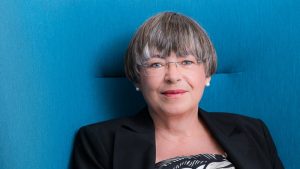
“A strong democracy needs strong women, and humanistic thinking strengthens all women who want to shape their lives with equal rights and self-determination,” said Ines Scheibe, representative of the Federal Executive Board of the Humanist Association of Germany today in Berlin on the occasion of this year’s International Women’s Day on March 8. Ines Scheibe called on people to take part in the numerous events taking place in many places across Germany to address current problems and promote commitment to women’s rights. “Equal rights, equal opportunities and freedom from paternalism or violence are neither natural nor an undisputed matter of course – even in our society. That is why it remains of great importance that we work together for a free and dignified life,” Ines Scheibe continues. Opponents of living conditions that promote emancipation can still be seen in all parts of Germany, Europe and the world: in the form of right-wing conservative politicians, as fundamentalist and dogmatic representatives of religious world views or as advocates of the radical market dismantling of welfare state structures that aim to achieve economic equality and guarantee self-determined and dignified living conditions for all people. “Opponents of emancipation can also be found where stereotypical ideas and conditions are reproduced in various ways on a more or less daily basis, according to which women are subordinate because of their gender, dependent on men or ‘available’ to others,” says Ines Scheibe, who has also been active in the coordinating group of the Alliance for Sexual Self-Determination since 2012. Ines Scheibe emphasized that today’s commitment to equal rights and self-determination for women is not only a tribute to countless representatives of the fight for women’s rights in earlier decades and centuries, but also ensures a life in freedom and dignity for women in future generations. “Women have been pioneers of humanist thought and action for over 2,000 years. For the challenges of the future, our global society needs many more such self-confident and creative personalities, at all levels of our lives, not just in science, politics or the arts,” said Scheibe. Ines Scheibe once again described the establishment of Women’s Day as a public holiday as not only symbolically important, but also politically valuable for a society in which the opportunities, self-determination and dignity of women are highly valued. In her eyes, it is incomprehensible that the fight for equal rights and equal opportunities for women today and in the future is denied this form of recognition. “It’s a shame that even more than 100 years after the first internationally celebrated Women’s Day, we still see the issue pushed to the margins of everyday working life in this way. All politicians in the parliaments of the federal states who are committed to women’s rights must therefore also campaign for progress here,” says Ines Scheibe.
Further information
The Alliance for Sexual Self-Determination in Berlin is calling for participation in the demonstration on March 8 from 5 p.m., starting at Hermannplatz. “We do not live in a gender-equal society; as women we are affected by sexist discrimination, we are paid less or not at all for some work, we have less influence in society or we are even affected by violence,” says the alliance in its call. An overview of all known campaigns relating to Women’s (Struggle) Day 2017, organized by federal state and city, has been compiled on the “Mädchenmannschaft” blog.