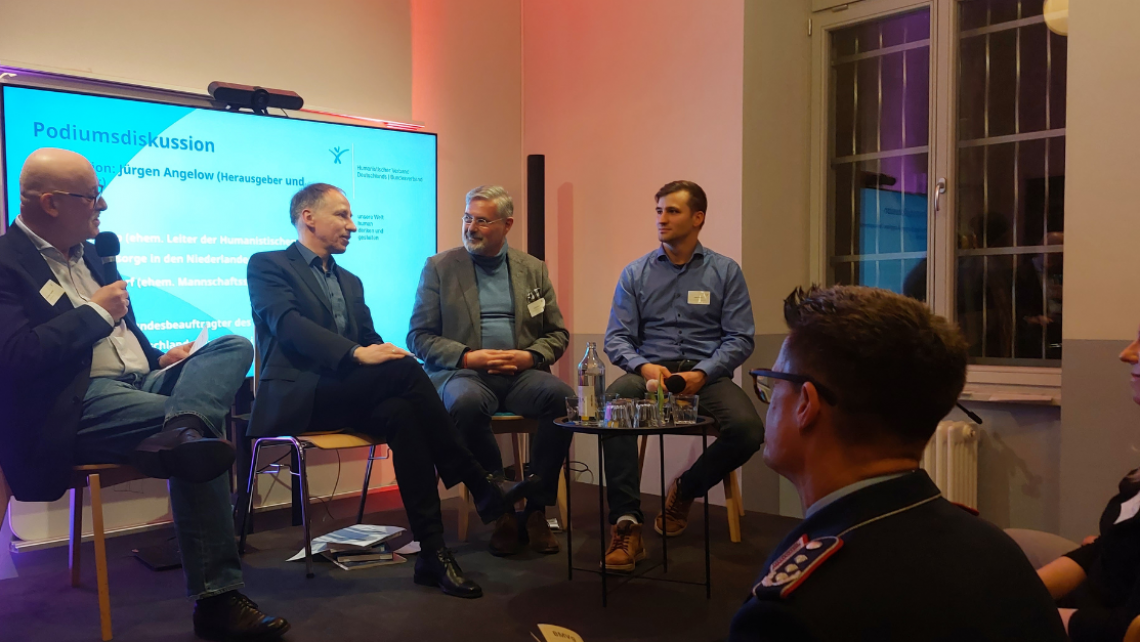
Berlin, 27 February 2026 In his introduction, Colonel (retired) Dr Thorsten Weber emphasized that the Bundeswehr is faced with the task of further developing its chaplaincy structures in light of social changes and military requirements, while taking demographic developments into account. This includes expanding the range of services on offer, as is currently being done for Muslim military personnel.
The Humanist Association of Germany considers itself organizationally and structurally in a position to take this step for non-religious soldiers as well. Katrin Raczynski, Spokesperson of the Board of the Humanist Association of Germany – Federal Association, explained: “With our regional associations from Berlin-Brandenburg to Hesse and Baden-Württemberg, we have nationwide structures, professional experience and regional roots. These prerequisites qualify the Federal Association to help shape a humanistic pastoral care service in the German Armed Forces.”
International experience supports this approach. Erwin Kamp, former head of the Humanist Military Chaplaincy in the Netherlands, emphasized: “Humanist military chaplaincy complements existing services without supplanting them. The prerequisites for this are political backing and social anchoring.”
From the perspective of those affected, there is a clear need: “An offer that shares your own ideological stance can create trust and break down inhibitions,” said Robert Pittorf, a former soldier in the Bundeswehr.